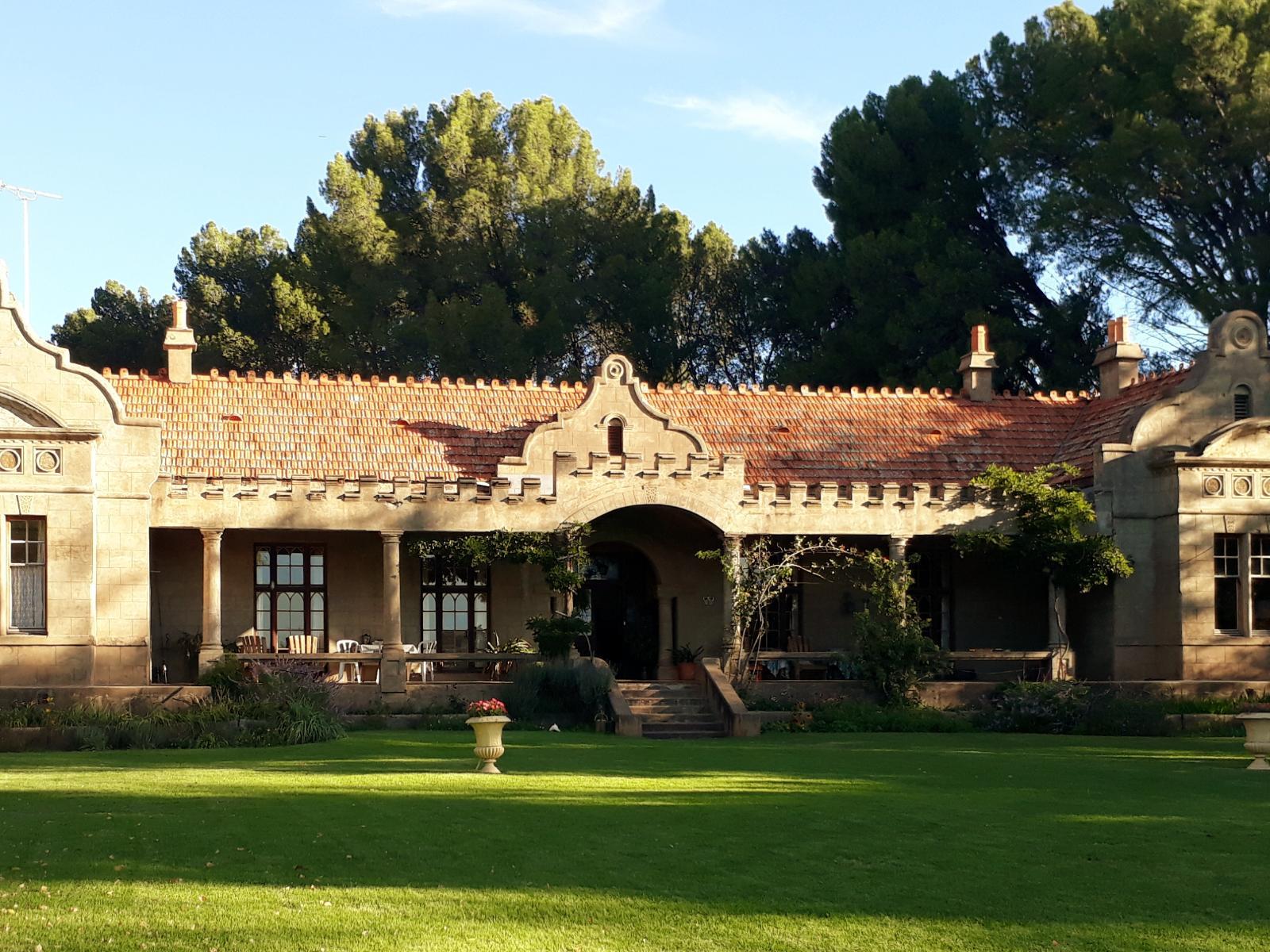
The Conville homestead with its ornate gables and stone verandah, lit by late afternoon sun

A Herbert Baker house · Aliwal North

Built 1906–1908, and still in the family

Cape Dutch gables, brass beds and a verandah on three sides, on a farm that runs down to the Orange River — minutes off the N6, and a world away from it.

Four guest rooms Breakfast included Dam on the farm Minutes from the N6
1906–08
When it was built
4
Guest rooms
Sleeps 10
Across the house
Breakfast
Included each morning
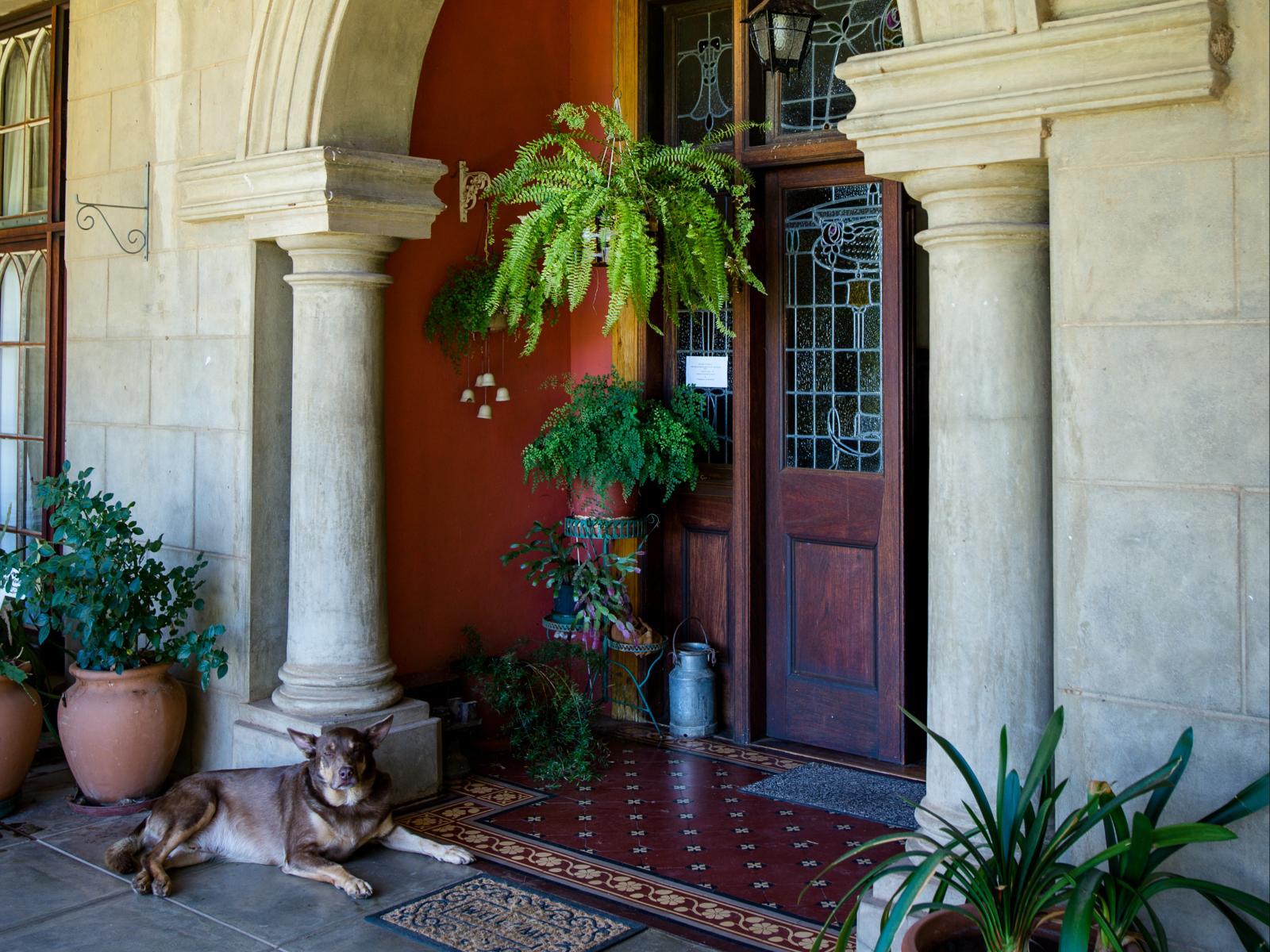
The front entrance of the homestead, with stone columns, an arched portico, potted ferns and a dog asleep on the step
Brass beds & original antiques
Welcome

The ideal place to break a long journey — or to stay a while

Conville stands about 3 km from the centre of Aliwal North and a kilometre back from the Orange River, with the farmlands running down to the water and a dam below the house. It is the kind of farmhouse you slow down for: a verandah on three sides, pressed ceilings, stained glass, and a garden the birds got to first.

The house offers four guest rooms, each with its own entrance from both inside and outside the house, so you can come and go as you please. Every room features its original brass poster bed alongside many of the antiques the house has gathered over the years.

Whether you simply need somewhere restful to stop en route to or from the Eastern Cape, or you are looking for a proper getaway from the noise of the city, you are very welcome here.


Where you’ll sleep

Four rooms, no two the same

Original brass poster beds, high ceilings and period detail throughout. An additional mattress can be added to any room for a child.

Sleeps 4

The Family Suite

Two large adjoining rooms sharing one bathroom — a double bed in the main room and two singles in the second. The original wallpaper and floorboards are left just as they were.

  • Sleeps 4 — one double, two singles
  • Two adjoining rooms, en-suite bathroom
  • Private entrance, inside and out
Double

The Red Room

Carpeted, curtained and genuinely warm in an Eastern Cape winter, with an original brass poster double bed and a proper bath through the door.

  • Brass poster double bed
  • En-suite bathroom with a bath
  • Private entrance, inside and out
Twin beds

The Green Room

Two brass poster singles and the original hand-crafted wooden cupboards, with its own balcony and its own way in — the choice for friends or siblings sharing, or for anyone arriving late and leaving early.

  • Two single brass poster beds
  • Own bathroom, not en-suite
  • Private balcony and separate entrance
Double

The Garden Room

Quieter and plainer than the rooms in the main house, with one of the original stained glass windows, an antique wardrobe and chest of drawers, and a shower room of its own just through the door.

  • Double bed
  • Private shower room
  • Original stained glass window

Good to know — breakfast is served in the old dining room each morning. An additional mattress can be added to a room for a child, and every room has its own entrance from both inside and outside the house. There is WiFi throughout, free parking on the property, and a braai and picnic area in the garden.

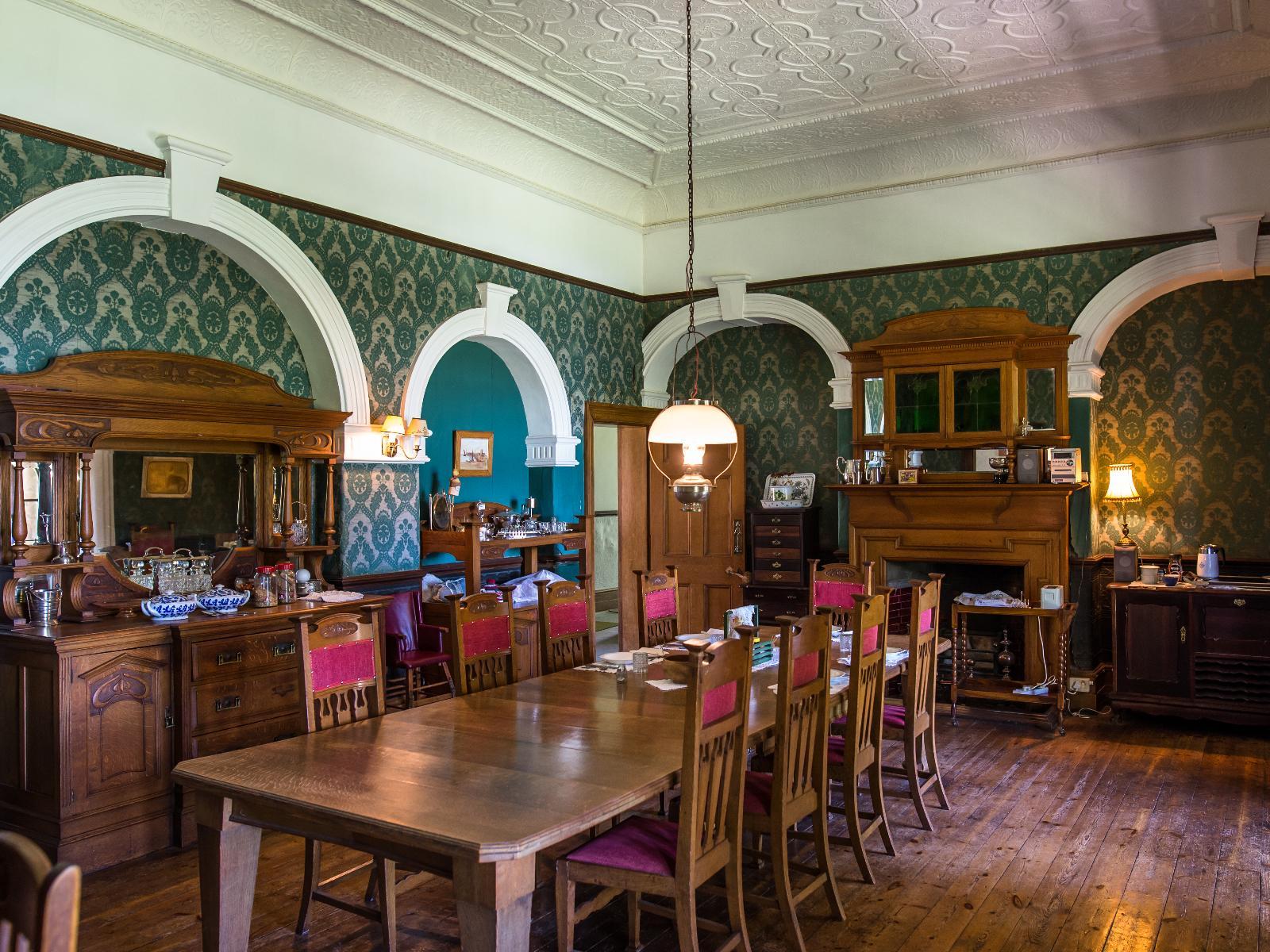
The dining room: a long wooden table under a pressed ceiling, framed by arched alcoves, green damask wallpaper and a fireplace
The house

Breakfast under a pressed ceiling

Every morning breakfast is laid out in the old dining room — the long table, the arched alcoves, the green damask and the fireplace all exactly where they have always been.

Conville has been kept rather than renovated. The leaded and stained glass in the front door and windows is original, as are the brass beds, the portraits, the oil lamps and much of the furniture. It is a house with a long memory, and the family who run it are still adding to the story.

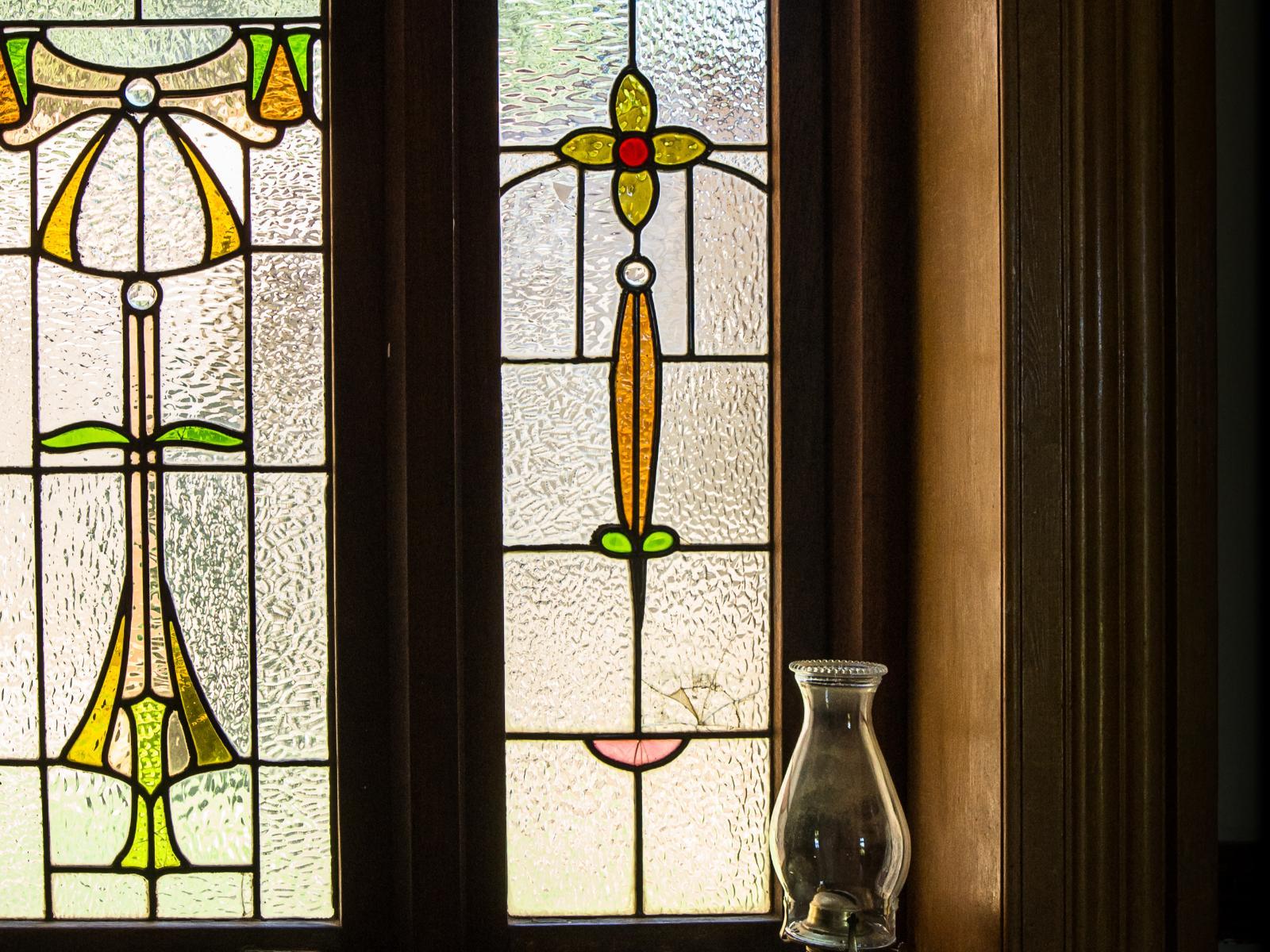
Two original stained glass window panels in amber, green and red, in an Art Nouveau design
Mackintosh Glass & furniture
History

Designed by Herbert Baker

Conville was drawn by Herbert Baker — later Sir Herbert, the architect of the Union Buildings and Groote Schuur — and built between 1906 and 1908 for David Gerrand, a Scottish civil engineer who had come out to the district for hydraulic engineering work. His family have lived in it ever since.

The Cape Dutch gables across the front are Baker’s signature revival style, finished here with castellated edging you will not find much of elsewhere in this part of the country. The roof went on in Marseilles tiles, the verandah wrapped three sides of the building on concrete pillars, and the joinery was done properly: teak for every external door and window, oak for the doors inside.

The stained glass came from Glasgow, designed by Charles Rennie Mackintosh — the foremost figure of Scottish Art Nouveau — and some of the antique furniture in the house is his work as well. The glass still throws colour across the hallway on a bright morning. Smaller things have lasted too: the servants’ bell system is still mounted in the main hallway.

The farm around it was about 200 acres under irrigation, growing lucerne to feed prize ostriches and a pedigree herd of Ayrshire cattle. The lucerne lands are still in production today.

“A commodious and substantial building of neat design.” Somerset Playne, The Cape Colony, 1910
Architect
Herbert Baker Later Sir Herbert — architect of the Union Buildings and Groote Schuur.
Built
1906–1908 For David Gerrand, a Scottish civil engineer, and home to his family ever since.
The roof
Marseilles tiles Above Cape Dutch gables finished with castellated edging.
Joinery
Teak & oak Teak for the outside windows and doors, oak for those within.
Glass & furniture
Mackintosh Charles Rennie Mackintosh of Glasgow designed the stained glass and some of the antique furniture.
The farm
200 acres Irrigated lucerne, once grown for prize ostriches and Ayrshire cattle.

On the farm

Days that fill themselves

The farm runs down to the Orange River, and guests are free to wander it. Bring binoculars and a rod; leave the schedule at home.

Walking

Farm roads and river paths to walk at your own pace, with open country in every direction.

Birdwatching

River, reedbed, willow and open veld in one place — barn owls among the residents.

Fishing

Fish the Orange River from the farm’s own banks, in the quiet of early morning or last light.

Doing nothing

A chair on the verandah, croquet on the lawn, and a night sky with nothing in the way of it.

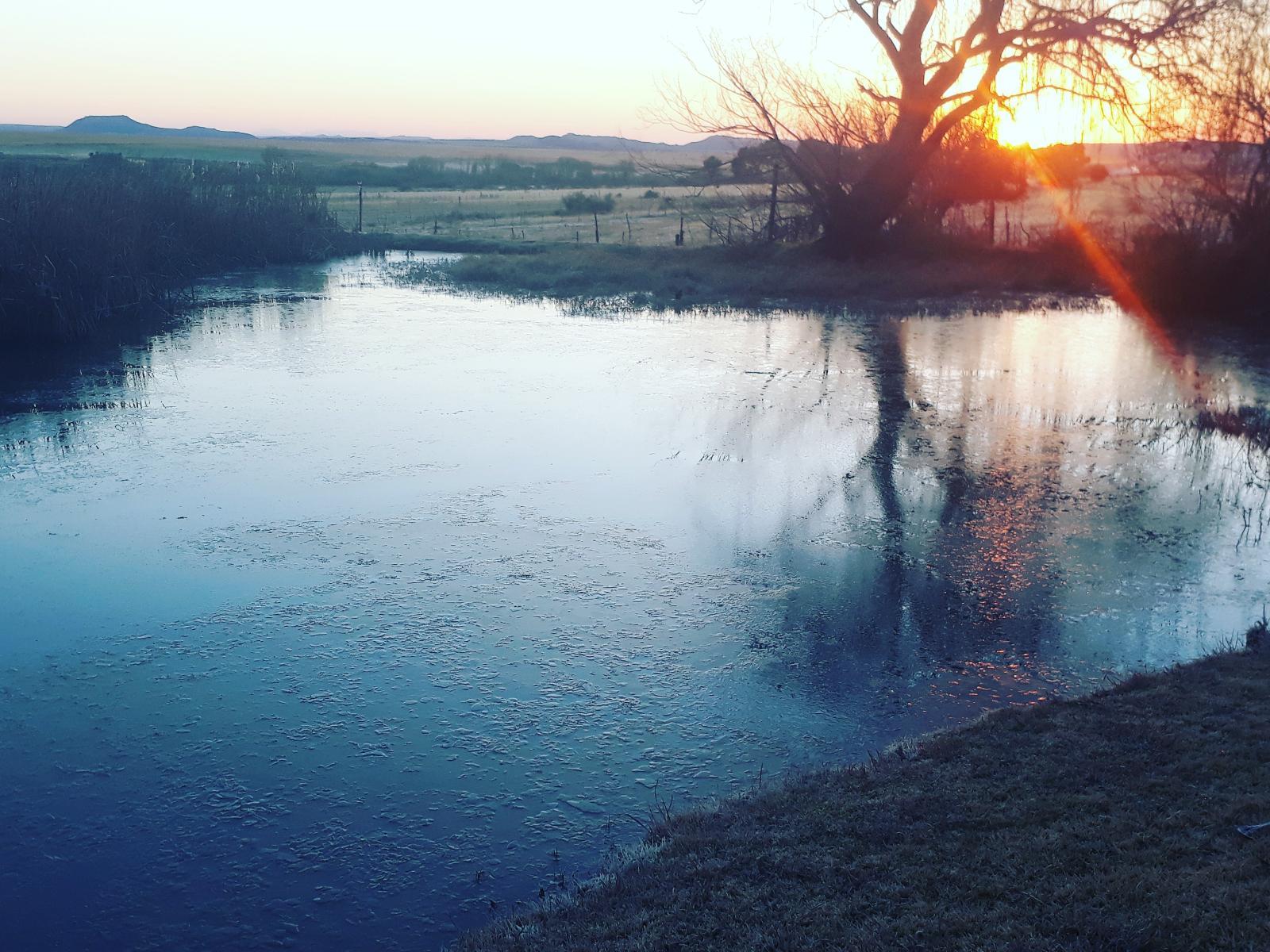
The Orange River at sunset, with bare trees reflected in still water
Nearby

Aliwal North

The town grew up around a drift — a crossing place on the Orange River used long before anyone thought to build a town beside it.

It was founded in 1850 by Sir Harry Smith, then Governor of the Cape Colony, who named it after a battle he had won in India four years earlier. The “North” was added to tell it apart from Aliwal South, which is now Mossel Bay. Locally it is Maletswai, a Sesotho name meaning the place of salt.

Aliwal North made its name twice over: as a transport town, once the railway arrived from East London in 1885, and as a health resort, thanks to the mineral hot springs that still draw visitors today. The Frere Bridge of 1880 was eventually replaced by the General Hertzog bridge that carries the N6 north.

Much of the town’s harder history belongs to the Anglo-Boer War, when a concentration camp was established here; a memorial was raised in 1981. The Kerkplein Museum and the memorial of remembrance are both a few minutes from the farm gate, which makes for an easy day: history in the morning, the hot springs after lunch, and back before dark.


Getting here

Easier to find than you’d think

Conville is about 3 km from the centre of Aliwal North and a few minutes off the N6, with the last stretch on a dirt road. Just follow the signs.

Arriving from the north on the N6

  1. Cross the bridge into Aliwal North.
  2. Turn immediately left into Queens Terrace, just after the Shell garage.
  3. Continue straight for about 1.8 km, until the road forces a right turn into King George Street.
  4. Carry on to the T-junction and turn left onto the dirt road.
  5. After about 900 m, Conville is on your right.

Coming from another direction?

Give Bruce a call on +27 (0)60 994 7299 and he will talk you in, or open the map below and let your phone do the work. Arriving after dark is no problem — just let us know roughly when to expect you.

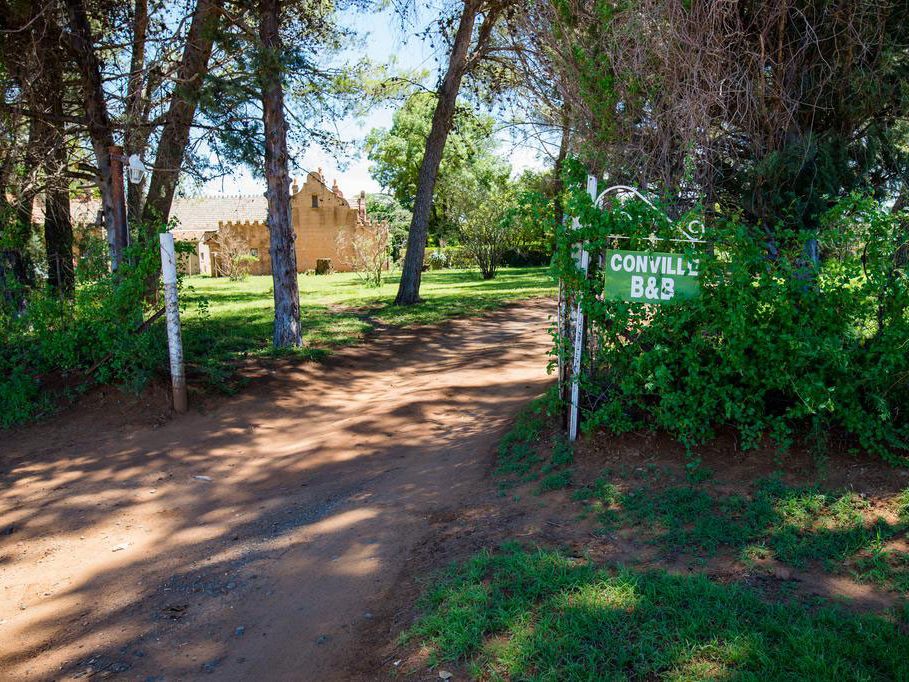
The Conville B&B sign at the farm gate, on a shaded dirt road

Conville Guest Farm

Aliwal North, Eastern Cape, South Africa

Open in Google Maps

Contact

Speak to Bruce

Bruce is your host. Call, message or email him directly — he is happy to help with directions, late arrivals or anything else.

Book your stay

Check live availability and reserve your room online, or send Bruce a WhatsApp and he will take it from there.

Check Availability & Book Message on WhatsApp Send an Email
Call Check Availability